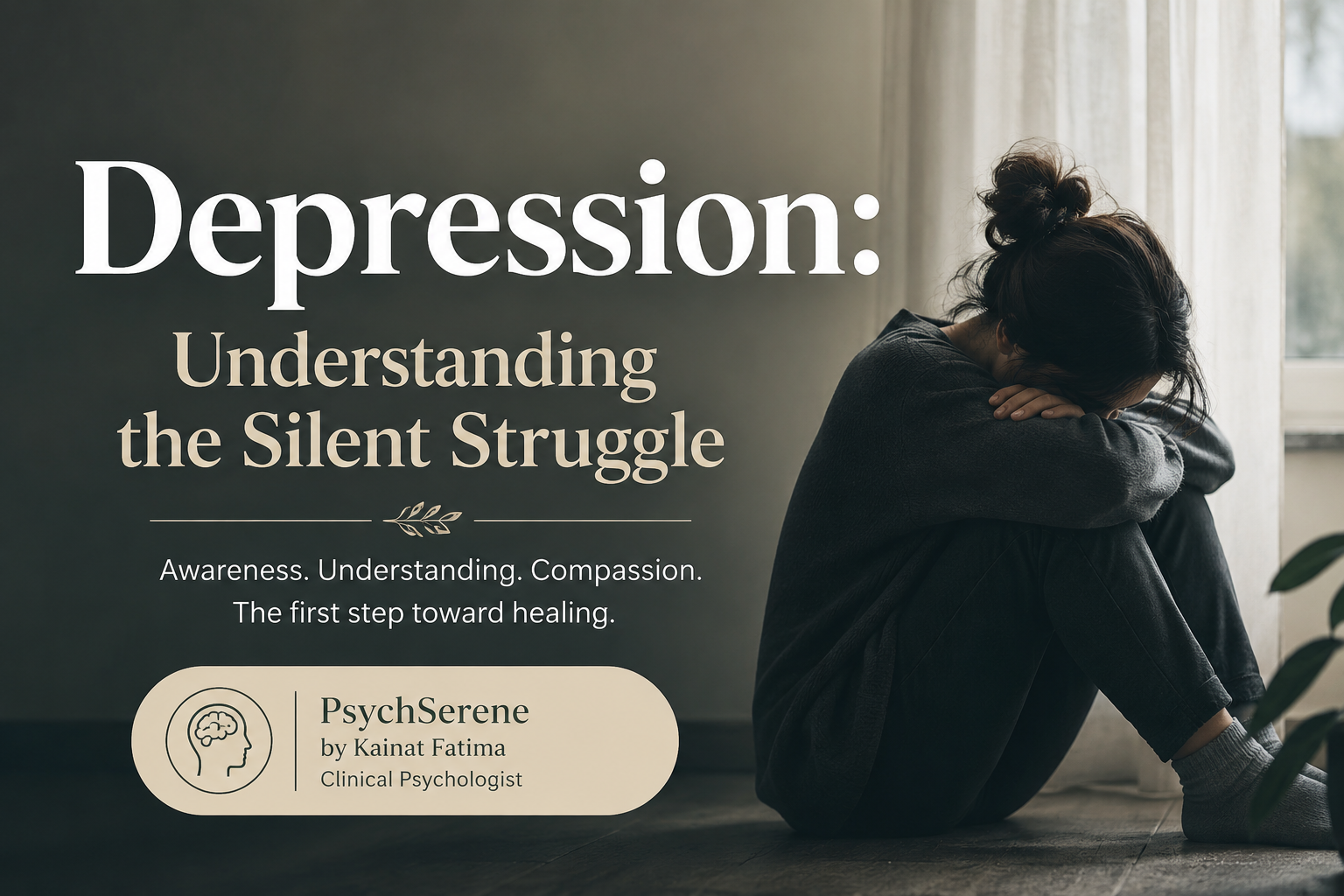
Depression: Understanding the Silent Struggle
By Kainat Fatima, Clinical Psychologist | PsychSerene
Depression is more than feeling sad after a difficult day. It is a common yet serious mental health condition that affects how a person thinks, feels, and functions in everyday life. It can impact relationships, work, education, physical health, and overall quality of life. The good news is that depression is treatable, and with the right support, recovery is possible.
What Is Depression?
Depression, also known as Major Depressive Disorder (MDD), is characterized by persistent feelings of sadness, emptiness, or loss of interest in activities that were once enjoyable. These symptoms last for at least two weeks and interfere with daily functioning.
Depression can affect people of any age, gender, or background. It is not a sign of weakness or a lack of willpower it is a genuine medical and psychological condition that deserves understanding and treatment.
Common Symptoms of Depression
While symptoms vary from person to person, common signs include:
- Persistent sadness or low mood
- Loss of interest or pleasure in daily activities
- Fatigue or low energy
- Difficulty concentrating or making decisions
- Changes in appetite or weight
- Sleeping too much or too little
- Feelings of worthlessness, guilt, or hopelessness
- Irritability or restlessness
- Social withdrawal
- Recurrent thoughts of death or suicide
If these symptoms persist for two weeks or longer, it is important to seek professional help.
What Causes Depression?
Depression usually develops due to a combination of biological, psychological, and social factors.
Biological Factors
- Family history of depression
- Changes in brain chemistry
- Hormonal changes
- Chronic medical illnesses
Psychological Factors
- Negative thinking patterns
- Low self-esteem
- Childhood trauma
- Unresolved grief
Social and Environmental Factors
- Relationship difficulties
- Financial stress
- Academic or workplace pressure
- Social isolation
- Major life changes
Understanding the underlying causes helps guide effective treatment.
Types of Depression
Some common forms include:
- Major Depressive Disorder
- Persistent Depressive Disorder (Dysthymia)
- Postpartum Depression
- Seasonal Affective Disorder (SAD)
- Depression associated with Bipolar Disorder
Each type has unique characteristics and may require different treatment approaches.
When Should You Seek Help?
Many people delay seeking help because they believe they should "handle it on their own." However, professional support is recommended if:
- Symptoms continue for more than two weeks.
- Daily activities become difficult.
- Relationships or work are affected.
- You feel hopeless most of the time.
- You have thoughts of self-harm or suicide.
Early intervention often leads to better outcomes.
How Is Depression Treated?
Treatment depends on the severity of symptoms and individual needs.
Psychological Therapy
Evidence-based therapies include:
- Cognitive Behavioral Therapy (CBT)
- Behavioral Activation
- Interpersonal Therapy (IPT)
- Acceptance and Commitment Therapy (ACT)
- Mindfulness-Based approaches
Therapy helps individuals identify negative thought patterns, develop healthier coping strategies, and improve emotional well-being.
Medication
For moderate to severe depression, a psychiatrist may prescribe antidepressant medication. Medication is often most effective when combined with psychotherapy.
Lifestyle Changes
Small daily habits can support recovery:
- Maintain a regular sleep schedule.
- Exercise regularly.
- Eat a balanced diet.
- Stay connected with supportive people.
- Practice relaxation and mindfulness.
- Set realistic daily goals.
- Limit alcohol and recreational drug use.
These changes are supportive but should not replace professional treatment when needed.
Supporting Someone with Depression
If someone you care about is struggling:
- Listen without judgment.
- Encourage them to seek professional help.
- Avoid saying things like "Just stay positive."
- Offer practical support with everyday tasks.
- Check in regularly.
Compassion and patience can make a significant difference.
There Is Hope
Depression can make it feel as though things will never improve, but that feeling is part of the illness not reality. Millions of people recover from depression with appropriate treatment, support, and time.
Reaching out for help is a sign of courage, not weakness.
Need Professional Support?
If you or someone you love is experiencing symptoms of depression, remember that you do not have to face it alone. Professional psychological support can help you understand your experiences, develop effective coping strategies, and work toward recovery.
PsychSerene by Kainat Fatima provides evidence-based psychological support in a compassionate, confidential, and non-judgmental environment. Taking the first step today could be the beginning of healing.